Liquid Gold: Olive Oil Culture in Crete
There are, by most counts, somewhere around thirty million olive trees on Crete, which works out at roughly fifty per inhabitant. The island produces a substantial share of all Greek olive oil, nearly all of it extra virgin, and the relationship runs deeper than agriculture: families who left farming generations ago still keep their trees, take harvest leave in November, and judge a year as good or bad by the press. Understanding the oil is the shortest route to understanding the island.
The tree that outlived everyone
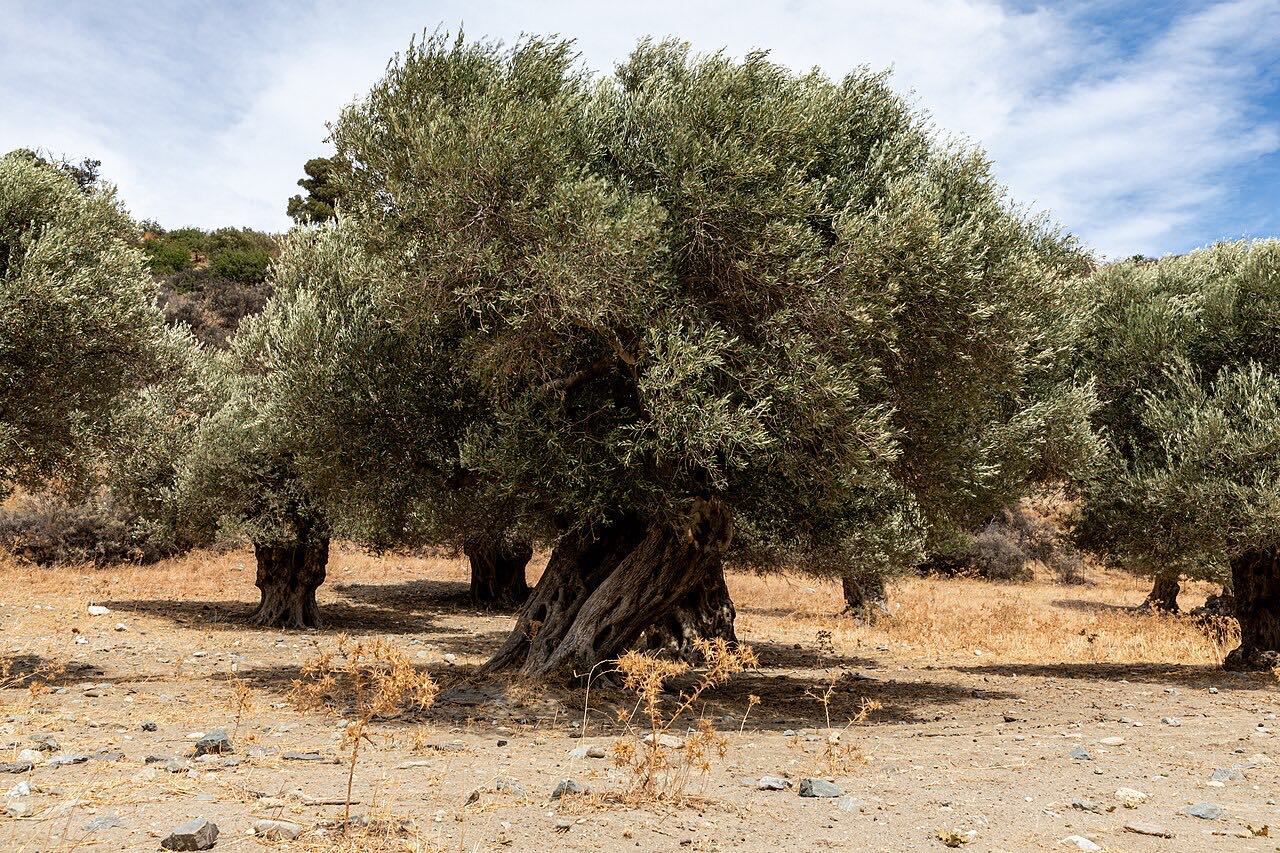
In the village of Ano Vouves, west of Chania, stands an olive tree estimated to be between two and three thousand years old, its trunk twisted into something closer to sculpture than timber. It still bears fruit, and branches from it were used to crown marathon winners at the Athens Olympics in 2004. A small museum sits beside it, the village asks nothing for a look, and the detour is easy from the coast around Kolymbari, itself the centre of one of the island's protected designation oils.
What makes Cretan oil different
Most of the island grows Koroneiki, a small-fruited variety that gives peppery, grassy oil with high polyphenols, alongside the local Tsounati in the western hills. The protected designations to look for on labels are Kolymvari in the west, Peza in the centre and Sitia in the east, each with its own character. The peppery catch at the back of the throat from a fresh oil is the sign of quality, not a fault; Cretans call a good new oil "spicy" with approval.
Harvest season and how to see it
From November to January the groves fill with nets, ladders and the rattle of harvesting rakes, and village presses run day and night. Several mills and estates around Chania, Rethymno and Sitia open for tours and tastings; seasons and hours vary, so check locally before driving out. A proper tasting works like wine: the oil is warmed in a cupped glass, slurped with air, and judged on fruit, bitterness and that pepper finish. After ten minutes you will never again buy the palest bottle on the supermarket shelf.
Bringing it home, using it here
Buy from a mill or a cooperative shop rather than the airport, ask for the current harvest year, and choose tins over clear glass, since light is the enemy. On the island itself, the oil explains the food: it is why a plate of boiled wild greens or a simple dakos tastes like an event. Our Cretan food guide covers the dishes the oil was made for, and if you want to build a quiet western base near the groves, the villages of the Apokoronas region sit surrounded by them.
The last word belongs to the locals, who pour oil on everything except dessert and occasionally on that too. When a Cretan grandmother tells you the oil is the medicine, the longevity statistics suggest she is not entirely joking.