Heraklion Beyond the Museum: Markets, Forts and City Beaches
Most visitors give Heraklion three hours: museum, Knossos, lunch, gone. The city deserves better. Crete's capital is a working Greek city of 170,000 people wrapped in four kilometres of Venetian walls, with a harbour fortress you can climb through, a market street that has fed the town for over a century, and an eating scene that has quietly become one of the best in Greece. Give it a night or two and it changes character entirely once the day trippers leave.
The fortress and the walls
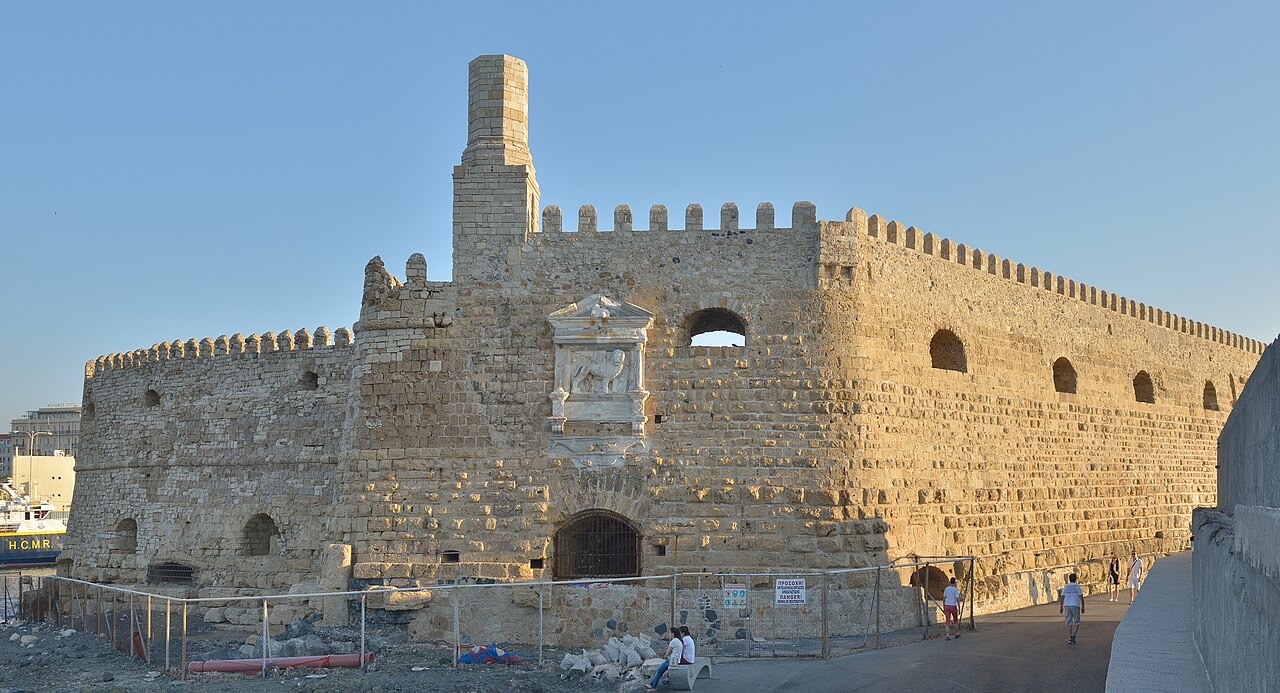
Start at the harbour. The Koules fortress has guarded the entrance since the 16th century, and its restored interior of vaulted chambers, cannon and dimly lit ramps opens onto a rooftop with the whole city behind you and, on a clear day, the island of Dia offshore. From there the Venetian walls invite a walk; they are among the longest city walls in the Mediterranean, and the stroll along the top leads to the Martinengo bastion, where the writer Nikos Kazantzakis lies buried under a plain stone cross and his own epitaph about hoping for nothing, fearing nothing, being free.
Markets and the food streets
The covered stalls of 1866 Street still sell mountain herbs, graviera cheese, honey and leather, and haggling remains a participation sport. Around the Lions fountain, where the Venetian governor Morosini piped water into the city in 1628, cafes run from breakfast bougatsa to late raki. The real eating happens in the lanes between Daidalou and the market: modern Cretan kitchens reworking grandmother's recipes, and old-school mezedopoleia where small plates keep arriving until you surrender. Order whatever is written on the paper taped to the wall rather than the laminated menu.
Museum and palace, done properly
The Archaeological Museum holds essentially everything important the Minoans left behind, from the snake goddesses to the Phaistos Disc, and it rewards a slow ninety minutes. Knossos sits 20 minutes south by bus or taxi; go at opening or in the last two hours to dodge the cruise crowds. Our dedicated Knossos and Heraklion guide covers the practical details of combining the two.
Beaches within reach
A city break here does not mean abandoning the sea. Ammoudara, west of town, is a long sandy stretch with beach bars and a steady summer breeze that windsurfers appreciate. East past the airport, Karteros and Amnissos offer sand with Minoan ruins in the dunes. Both are a short taxi or local bus ride from the centre.
Logistics are the easiest on the island: the airport is barely 15 minutes from the city centre, ferries from Piraeus and the Cyclades dock right below the fortress, and buses fan out across Crete from two terminals near the harbour. Plenty of travellers use a Heraklion night at each end of the holiday as bookends around a resort stay; check current offers on our deals page if your dates are flexible. The city will not charm you in the first hour. By the second evening, with raki arriving unasked at the end of dinner, it usually has.
Ready to visit Heraklion Port? Book your transfer at a fixed price.
Destinations