A Minoan Crete Itinerary: Four Palaces in Five Days
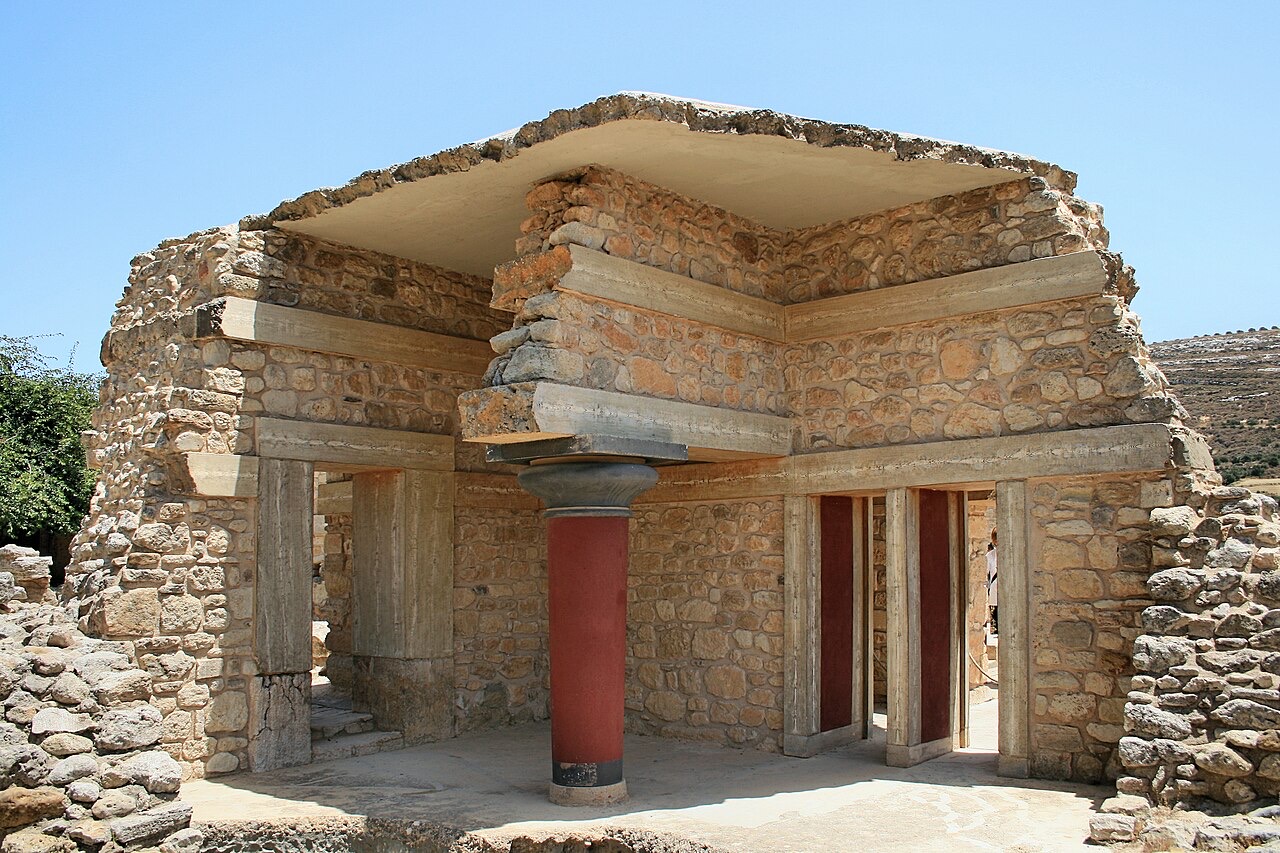
Europe's first high civilisation rose on Crete around 2000 BC, built palaces without fortifications, traded across the eastern Mediterranean, and fell in circumstances scholars still argue about, with the eruption of Thera and a wave of destruction around 1450 BC as the leading suspects. Four excavated palace sites survive: Knossos, Phaistos, Malia and Zakros. Seeing all four in one trip sounds ambitious and is actually a relaxed five days, because the Minoans conveniently spaced their capitals along roads you would want to drive anyway.
Days one and two: Knossos and the museum
Start with the big one. Knossos, excavated by Arthur Evans from 1900, is the largest and most famous palace, controversially reconstructed and all the more legible for it. Pair it with the Heraklion Archaeological Museum, home of the original frescoes, the snake goddess figurines and the Phaistos Disc, on the same day or the next morning. The practical details, timing tricks included, are in our Knossos and Heraklion guide. Sleep in Heraklion or on the coast east of it.
Day three: Malia
Twenty minutes east of the resort strip, the palace of Malia is the underrated middle child: the great central court, the giant storage jars and the famous kernos stone, a disc with 34 small hollows whose ritual purpose remains anyone's guess. It is flat, quiet and quick, ninety minutes covers it, which leaves the afternoon for the beach. The contrast between Bronze Age masonry and the nearby party strip is part of the entertainment, and both faces of the town repay a look.
Day four: Phaistos and the south
Cross the island to the Messara plain for Phaistos, the unreconstructed palace with the grand staircase and the best setting of the four, adding the villa of Agia Triada and Roman Gortyna if the appetite holds. End the day with a swim below the caves at Matala. The full southern circuit has its own write-up in our Phaistos and the Minoan south guide.
Day five: Zakros, the far east
The last palace asks the most and gives the most. Kato Zakros sits at the remote eastern tip of the island, below a gorge called the Valley of the Dead, beside a pebble bay with three tavernas. Nikolaos Platon began excavating in 1961 and found the palace unlooted, its storerooms still holding bronze ingots and elephant tusks from the Minoan trade routes. It is a long drive best handled with an overnight in Sitia; the transfer from Heraklion Airport to Sitia covers the big leg in one comfortable run.
Site fees and hours vary by season, so check locally, and carry water everywhere; Minoan architects were stingy with shade. Five days, four palaces, one civilisation, and you will come home knowing the difference between a pithos and a kernos, which is more than most of Europe can say.
Έτοιμοι για Ανάκτορο Κνωσού; Κλείστε μεταφορά σε σταθερή τιμή.
Προορισμοί