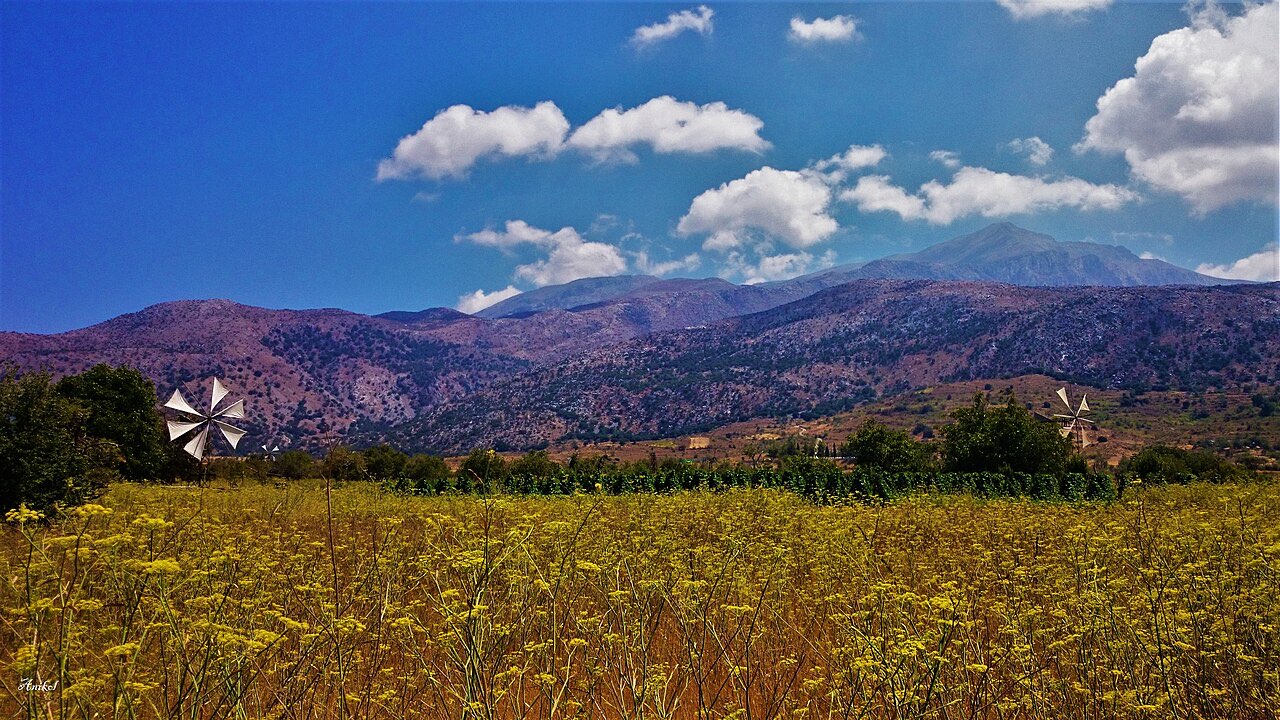
The Lasithi Plateau: Windmills, Orchards and the Cave of Zeus
High in the Dikti mountains, about 840 metres above the beaches, the Lasithi Plateau spreads out as a green disc of orchards and small fields ringed completely by peaks. It is one of the few permanently inhabited high plateaus in Greece, it grows apples, pears and potatoes that taste of the altitude, and it hides, in a cave on its southern rim, the spot where Greek myth says Zeus himself was born. As half-day escapes from the coast go, it is hard to better.
The windmills, then and now
The plateau's fame rests on its windmills. Through the twentieth century thousands of white-sailed pumps raised irrigation water across the plain, and period photographs show a valley filled with canvas. Most are gone or skeletal now, replaced by diesel and drip lines, though restored examples turn here and there and the image survives on every postcard rack in Crete. The grander stone windmills stand at the Seli Ambelou pass on the northern rim, where the road crosses into the plateau and the view drops away on both sides; stop there whatever else you skip.
The Dikteon Cave
Above the village of Psychro, a steep twenty-minute path climbs to the Dikteon Andron, the cavern where Rhea is said to have hidden the infant Zeus from his child-swallowing father Kronos. Myth aside, the cave was a major place of worship for over a millennium, and excavations recovered bronze votives by the hundred. Inside, a walkway descends past curtains of stalactites to a green pool at the bottom. There is an entrance fee and a sometimes slippery path, so wear real shoes and check opening times locally; donkeys still offer rides up the hill for those who want the full nineteenth-century experience.
Around the rim
The drive around the plateau threads through a dozen farming villages where tavernas serve lamb and plateau potatoes to people who mostly are not tourists. On the climb up from the north coast, the monastery of Kera Kardiotissa, with its frescoed chapel, makes a natural pause. Come in spring and the plain is green and loud with birds; in autumn the orchards hang heavy and roadside stalls sell apples by the crate. Winter brings snow on the peaks and closed shutters, which has its own austere appeal.
Getting there
Roads reach the plateau from Hersonissos and Stalis on the north coast in about 45 minutes of switchbacks, or from Agios Nikolaos in a little over an hour. It pairs naturally with an east Crete stay; the transfer from Heraklion Airport to Agios Nikolaos puts you within striking distance, and our Agios Nikolaos town guide covers the lakeside base itself. Families staying on the Hersonissos strip will find the plateau the easiest genuine mountain day on the island; the resort side of that equation is covered in our Hersonissos guide. Take a jumper whatever the season. Eight hundred metres is eight hundred metres.