What to Eat in Crete: From Dakos to the Last Free Raki
Cretan food is the original Mediterranean diet, the one the nutritionists studied in the 1960s when they noticed villagers in the hills outliving most of Europe. It is built on olive oil, mountain greens, pulses, barley rusks and a little meat on feast days, and the remarkable thing is how little it has changed. Order well in a village taverna and you eat roughly what a farmer ate a century ago, only with colder beer.
Start with the classics
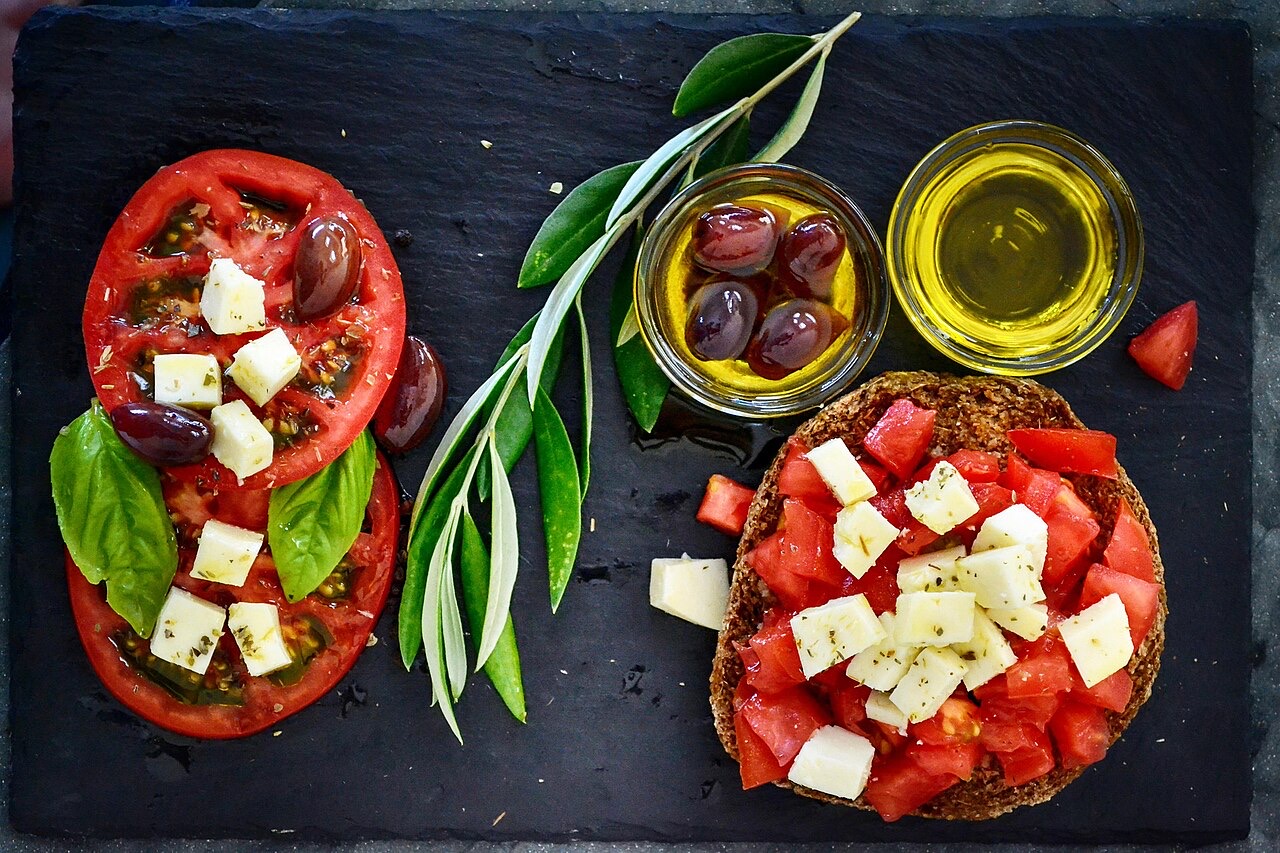
Dakos is the dish to learn first: a barley rusk softened with grated ripe tomato, crowned with crumbled xinomyzithra cheese and doused in oil. It sounds like a snack and eats like a meal. Kalitsounia, small pastries filled with soft cheese or wild greens, appear at every celebration, and chochlioi boubouristi, snails fried in hot oil and splashed with vinegar and rosemary, are far better than the description suggests. Keep an eye out for apaki, pork smoked over aromatic herbs, and stamnagathi, the slightly bitter wild chicory that locals prize above any cultivated green.
Meat, the Cretan way
In the mountains, lamb and goat rule. Antikristo, whole cuts of lamb propped around an open fire and cooked slowly "facing" the flames, is the old shepherds' method and still the centrepiece of village festivals. Gamopilafo, the wedding rice simmered in meat broth and finished with staka butter, turns up on menus far from any wedding, and in the south you will find sfakianopita, a thin cheese pie drizzled with honey that bridges main course and dessert. The fish tavernas of Nea Chora in Chania do the coastal side of the cuisine properly; our Chania old town guide points you to the right streets.
The raki ritual
At the end of any meal worth having, the waiter brings a small carafe of tsikoudia, the local grape spirit everyone calls raki, with fruit or tiny sweets, unasked and unbilled. It is hospitality, not marketing, and the correct response is to drink at least one glass and say yamas. Distillation season in late October and November turns villages fragrant; if someone invites you to a kazani, the communal still, accept.
Where to eat well
The reliable rule across the island: menus recited beat menus laminated, and ten minutes inland beats the front line of any harbour. Mountain villages such as Anogeia, Zaros and the hamlets of the Apokoronas feed you better for less than the resort strips ever will. Pair the eating with the drinking by reading our guide to Cretan wine and its villages, and when you are choosing a base for the holiday itself, the destinations page shows every area we serve with fixed transfer prices.
One practical note: portions are serious and starters arrive for the table, not the person. Order half of what instinct suggests, then add. The kitchen is not going anywhere, and neither, after gamopilafo, are you.