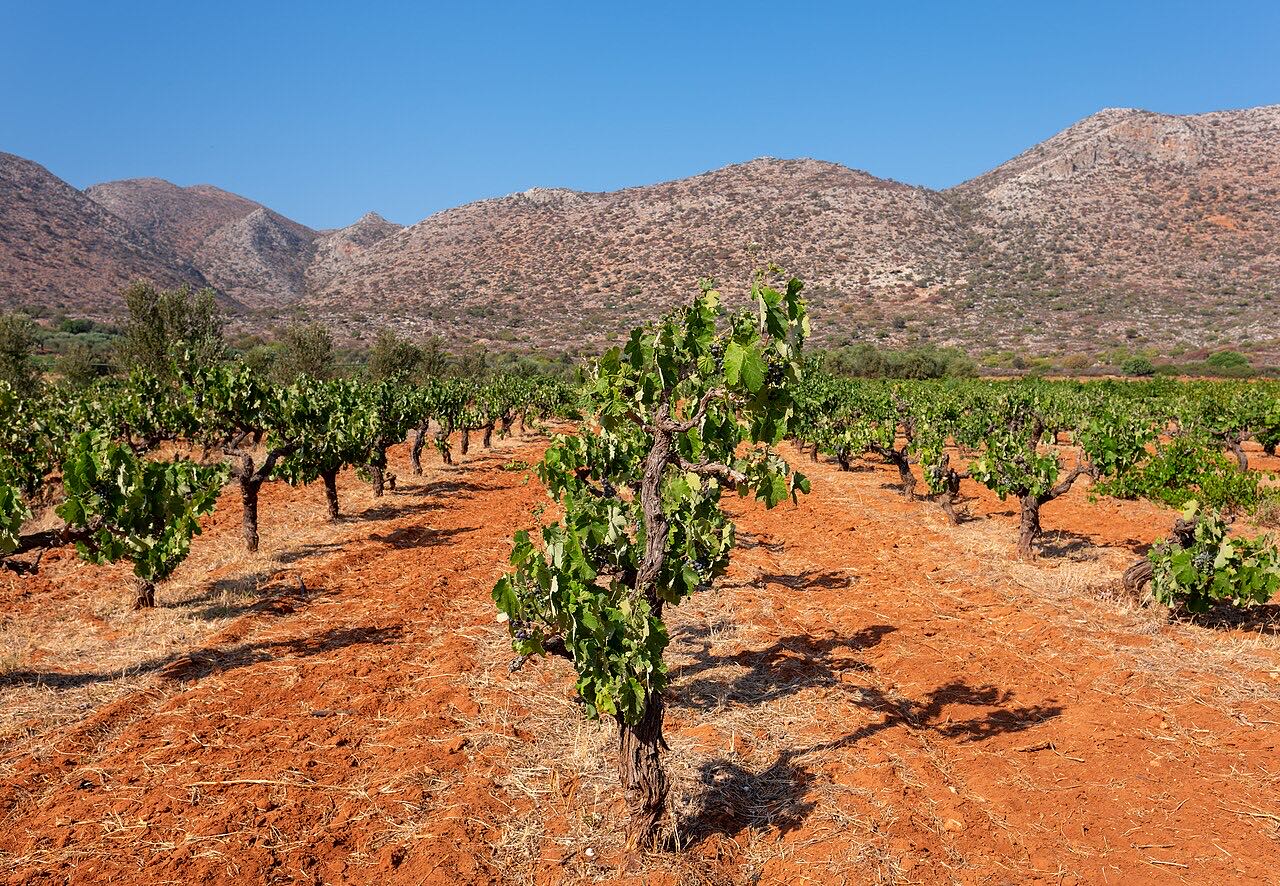
Cretan Wine: Ancient Grapes and the Villages That Pour Them
Wine has been pressed on Crete for around four thousand years. At Vathypetro, just south of the village of Archanes, archaeologists found a Minoan wine press that still looks ready for the harvest, which makes this one of the oldest wine landscapes in Europe. For decades the island shipped bulk wine and kept quiet, but a generation of growers has rebuilt the reputation around native grapes that exist nowhere else, and the wineries now welcome visitors with the same ease as the tavernas.
The grapes worth knowing
Vidiano is the white the sommeliers talk about: peachy, full, grown mainly around Rethymno and increasingly everywhere. Vilana and Thrapsathiri make the easy-drinking whites of the east, while Liatiko, documented on the island for centuries and possibly the oldest named variety in Greece, gives pale, perfumed reds and remarkable sweet wines around Sitia and Dafnes. Kotsifali is the soft, generous red of the Heraklion vineyards, traditionally blended with the darker, gripier Mandilari. In the far west, Romeiko makes the oddball oxidative wines of Chania, and growers such as Lyrarakis have rescued nearly extinct varieties like Plyto and Dafni from a handful of surviving vines.
The villages that pour them
The serious wine country sits in the hills 20 to 30 minutes south of Heraklion. Archanes is the prettiest base, a restored village of neoclassical houses with wineries and good tavernas within walking distance. Peza is the workhorse appellation next door, and Dafnes, west of the city, celebrates its Liatiko with a summer wine festival; dates shift, so check locally. Most estates run tastings from spring to autumn, some by appointment only, and the better ones pair the glasses with cheese and rusks rather than rushing you to the till. From the coast, the simplest plan is a morning around Knossos followed by an afternoon in the vines, since the palace and the vineyards share the same road south from Heraklion city.
Drinking it on the ground
In tavernas, ask for wine by the variety rather than the colour and you immediately get taken more seriously. House wine from the barrel, sold by the kilo rather than the bottle, is a legitimate pleasure in the villages, and the step up to a bottled Vidiano or a single-vineyard Liatiko rarely costs much. Sweet Liatiko, sun-dried in the old style, is the island's answer to port and almost nobody orders it; be the exception.
A tasting day works from any north coast base, and designated drivers are a solvable problem: book a driver for the afternoon and nobody has to spit. The food side of the equation has its own guide in what to eat in Crete, and if your trip leans west, several Chania-area estates lie within half an hour of the resorts on the Platanias coast.